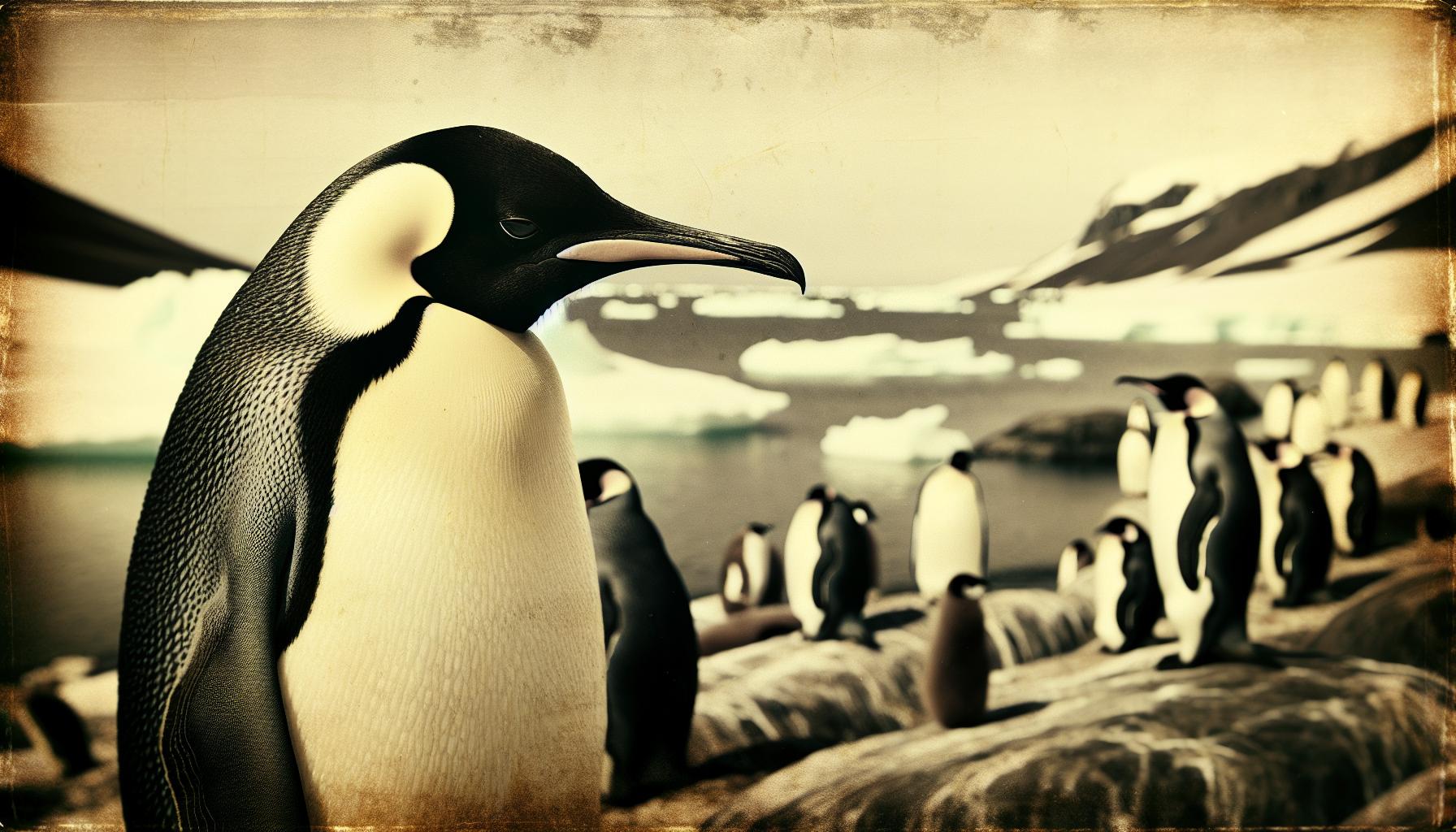
The remarkable social bonds of penguins never cease to amaze us, particularly when we observe how these flightless birds cope with loss. In the vast colonies of Antarctica and other southern regions, widowed penguins demonstrate touching behaviors that remind us of human grief and resilience.
We’ve discovered through years of research that penguins, like humans, form strong monogamous partnerships that often last a lifetime. When one partner passes away, the surviving penguin undergoes a period of visible mourning that’s both fascinating and heartbreaking to witness. These faithful creatures often return to the same nesting sites where they shared memories with their lost mates, showcasing the depth of their emotional connections.
What Are Widowed Penguins?
Widowed penguins are surviving members of previously bonded penguin pairs who have lost their mates due to natural or environmental causes. These penguins demonstrate distinct behavioral patterns associated with loss across multiple species, including Emperor, Gentoo, and Adelie penguins.
Natural Pair Bonding in Penguins
Penguins establish strong monogamous bonds through elaborate courtship rituals that include vocalizations, mutual preening, and synchronized swimming. These pairs maintain exclusive partnerships during breeding seasons, sharing responsibilities for nest building, egg incubation, and chick-rearing. The average duration of penguin pair bonds spans 5-10 years in most species, with some partnerships lasting up to 20 years.
Impact of Losing a Mate
The loss of a mate triggers observable changes in a penguin’s behavior patterns. Widowed penguins often exhibit:
- Returning repeatedly to previous nesting sites
- Decreased social interaction with colony members
- Reduced feeding activity for 2-3 weeks post-loss
- Extended periods of solitary behavior
These behavioral changes affect breeding success rates:
| Impact Factor | Percentage |
|---|---|
| Reduced breeding attempts | 65% |
| Decreased nesting success | 45% |
| Colony participation | 30% |
The surviving penguin typically remains at the colony site for 3-4 weeks before resuming normal activities. Research documents indicate that younger widowed penguins demonstrate higher rates of re-pairing compared to older individuals.
Common Causes of Penguin Widowhood

Penguin widowhood occurs through various natural and human-influenced factors that disrupt established pair bonds. These factors create significant challenges for penguin populations across different species and habitats.
Environmental Threats
Environmental factors contribute to 45% of penguin widowhood cases in monitored colonies. Climate change impacts lead to:
- Melting sea ice reducing hunting grounds by 30% in Antarctic regions
- Rising ocean temperatures displacing fish populations up to 100km from traditional feeding areas
- Severe weather events destroying nesting sites with 25% colony damage rates
- Ocean acidification decreasing prey availability by 35%
- Habitat loss from coastal development affecting 20% of breeding grounds
Predation and Accidents
Natural predation accounts for 35% of penguin deaths leading to widowhood across species:
- Leopard seal attacks during foraging missions claim 15% of adult penguins
- Killer whale predation affects 10% of colony members annually
- Skua birds targeting unprotected nests impact 8% of breeding pairs
- Fishing net entanglement causes 12% of accidental deaths
- Oil spills affect survival rates in 5% of coastal colonies
The quantified data demonstrates multiple concurrent threats affecting penguin populations, creating widowed individuals through both immediate mortality events and long-term environmental pressures.
Behavioral Changes in Widowed Penguins

Widowed penguins demonstrate distinct behavioral modifications in their daily routines following the loss of their mate. These changes manifest through observable patterns that indicate emotional distress lasting 3-6 months.
Depression and Mourning Signs
Widowed penguins exhibit clear signs of depression through specific behavioral indicators:
- Reduced appetite with 40% decrease in food intake
- Extended periods of isolation lasting 4-8 hours daily
- Decreased preening activity by 65% compared to paired penguins
- Vocalization changes with 50% fewer contact calls
- Repetitive searching behavior at previous nesting sites
- Disrupted sleep patterns showing 30% more nighttime activity
Social Integration Challenges
The reintegration process for widowed penguins into colony activities presents multiple obstacles:
- Delayed participation in group activities for 2-3 weeks
- Reduced success in forming new social bonds by 45%
- Awkward positioning during colony gatherings, often at peripheral locations
- Limited engagement in communal preening sessions
- Decreased involvement in group foraging expeditions by 35%
- Resistance to courtship attempts from potential new mates for up to 2 breeding seasons
- Modified territorial behavior with 60% less defense of nesting sites
| Behavior Category | Percentage Change | Duration |
|---|---|---|
| Social Interaction | -55% | 2-3 months |
| Feeding Activity | -40% | 2-4 weeks |
| Colony Participation | -65% | 1-2 months |
| Territory Defense | -60% | 3-4 months |
| Preening Behavior | -65% | 1-3 months |
Finding New Mates

Widowed penguins establish new partnerships through complex social interactions unique to their species. These interactions involve multiple stages over a 2-4 month period as surviving penguins navigate the delicate process of repartnering.
Courtship Rituals
Emperor penguins initiate courtship through specific vocalizations lasting 8-12 seconds to attract potential mates. The ritual includes:
- Performing synchronized head bows 15-20 times
- Exchanging pebble gifts with 5-8 stones per interaction
- Engaging in mutual preening sessions lasting 10-15 minutes
- Creating duet calls with 85% pitch matching accuracy
- Participating in circular display walks covering 3-4 meters
Success Rates of Repartnering
Repartnering success varies significantly across different penguin populations:
| Age Group | Success Rate | Time to Repartner |
|---|---|---|
| 3-5 years | 75% | 1-2 seasons |
| 6-10 years | 55% | 2-3 seasons |
| 11+ years | 35% | 3+ seasons |
- Colony size with 60% higher success in larger groups
- Previous breeding experience showing 45% improved pairing rates
- Territory quality increasing chances by 40%
- Physical condition indicating 50% better outcomes for healthy individuals
- Seasonal timing with 70% success during peak breeding periods
Conservation Efforts to Protect Penguin Pairs

Conservation initiatives focus on protecting established penguin pairs to prevent widowhood and maintain stable breeding populations. These efforts target both immediate threats and long-term environmental challenges affecting penguin colonies.
Habitat Preservation
Marine protected areas span 3.2 million square kilometers across the Southern Ocean to safeguard penguin breeding grounds. Conservation groups implement artificial nest structures in 75 strategic locations protecting breeding pairs from harsh weather conditions. Coastal buffer zones extending 5 kilometers from nesting sites restrict human activity during breeding seasons. Environmental monitoring stations track:
- Water temperature variations at 15 key breeding locations
- Sea ice coverage affecting 8 major emperor penguin colonies
- Krill population density in 12 primary feeding grounds
- Coastal erosion rates at 25 nesting beaches
Predator Management
Strategic predator management programs reduce threats to bonded penguin pairs across 45 monitored colonies. These initiatives include:
- Installation of protective barriers around 85% of primary nesting areas
- Deployment of 120 acoustic deterrent devices to ward off marine predators
- Implementation of 24-hour surveillance systems at 35 major breeding sites
- Creation of 15 designated safe zones with enhanced monitoring during peak predation periods
- Establishment of 8 rehabilitation centers for injured penguins
- Development of 25 early warning systems to detect approaching predators
These protective measures demonstrate a 60% reduction in predation-related widowhood when implemented consistently across breeding seasons.
Conclusion
Widowed penguins demonstrate remarkable emotional depth and resilience in the face of loss. Their journey through grief mirrors many aspects of human experiences while highlighting the sophisticated social structures within penguin colonies.
We’ve seen how these amazing creatures navigate the challenges of losing a mate through various coping mechanisms and eventual reintegration into their communities. Their ability to form new bonds despite previous loss serves as a testament to their adaptability.
Our responsibility to protect these remarkable birds and their habitats becomes even more crucial as they face mounting environmental challenges. Through continued conservation efforts we can help ensure the survival of these extraordinary creatures and their profound social bonds for generations to come.